Resolving Uncertainty
Resolution happens when a Situation contains something that is both important and genuinely uncertain.
It does not necessarily test whether an action “succeeds.” Success or failure may already be established by the fiction. In that case, resolution concerns what remains open: the form of the result, its price, its consequences, or what it transforms.
A resolution does not necessarily ask: “Does it work?” It asks: “What do we still not know?”
Quick Summary
What do you want? What do you risk? What question are we resolving, and at what scale? What matters on each side? Let's roll, read, compare, then see how the world responds.
The Grand Cycle of resolution
In Glorantha Perspectives, the eight steps follow the numerical order of the eight Power Runes already used by Runic Inspiration. A Situation is set in motion, passes through these powers, then becomes a new Situation.
| Step | Rune | Function in resolution |
|---|---|---|
| 1 | 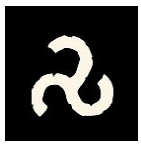 Movement Movement | Intention gives the Situation a direction. |
| 2 |  Death Death | Consequences name what may end, be lost, or be separated. |
| 3 | 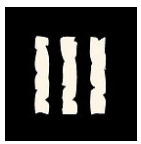 Harmony Harmony | The table brings its views into agreement on one question, one scale, and two shared outcomes. |
| 4 |  Stasis Stasis | Frame Factors and Bets temporarily fix the state of the world “here and now.” |
| 5 |  Life Life | The roll animates that constellation and brings forth an answer that is still only potential. |
| 6 |  Disorder Disorder | Worldview recomposes the roll according to its own way of reading reality. |
| 7 |  Truth Truth | Comparison establishes what reality actually answered. |
| 8 |  Illusion Illusion | That truth receives a particular fictional appearance and becomes lived Situation. |
This cycle is Glorantha Perspectives' Perspective on its own resolution, not an absolute cosmological truth standing above every other Perspective in Glorantha. Its symbolism deepens the procedure; it is never required simply to follow it.
Those who want to explore these correspondences further can use Runic Inspiration.
Four movements
Framing the Uncertainty
Steps 1 and 2 — Movement / Death. State the Intentions, then make important consequences visible.
The question is: what is set in motion, and what is genuinely at stake?
Weighing What Matters
Steps 3 and 4 — Harmony / Stasis. Agree on the Focus, its Zoom, and the two outcomes, then fix Frame Factors and Bets.
The question becomes: what are we looking at together, and what matters here and now?
Reading Reality's Answer
Steps 5 and 6 — Life / Disorder. Roll the dice, then read each roll according to the applicable Worldview.
The table asks: how does this constellation come alive, and how does this world read it?
Interpret and Continue
Steps 7 and 8 — Truth / Illusion. Compare reality's answers, then give the result a fictional form and continue.
The question becomes: what has reality decided, and how does it manifest in the Situation?
The eight steps
- Movement — State the Intentions.
- Death — Make important consequences visible.
- Harmony — State the Focus, Zoom, and two outcomes.
- Stasis — Identify Frame Factors and gather Bets.
- Life — Roll the dice.
- Disorder — Read according to Worldview.
- Truth — Compare reality's answers.
- Illusion — Give the answer fictional form and continue.
The complete loop becomes:
Situation → Intention → consequences → Focus / Zoom → outcomes in the balance → Frame Factors / Bets → roll → Worldview → reality's answer → comparison → fictional manifestation → transformed Situation
The final pair expresses the essential distinction: Truth decides; Illusion manifests.
Complete example
An Orlanthi messenger is fleeing a patrol and wants to cross a ford before being caught.
1. Movement — Intention. The Protagonist wants to reach the far bank with his message.
2. Death — Important consequence. Time states that if he is caught in the middle of the ford, he risks being captured with the message he carries.
3. Harmony — Focus, Zoom, and outcomes. Does he cross the ford before the patrol catches him? The two outcomes are: the messenger reaches the far bank before the patrol; the patrol catches him before he finishes crossing. The table chooses a Sequence Zoom: the whole approach and crossing, not every stride separately.
4. Stasis — Frame and Bets. The old bridge has been swept away by the flood: it is not an option and is a Frame Factor, not a negative Bet. Favouring the messenger: Has known this ford since childhood, Enduring horse, The wind masks the sound of his flight: 3 dice. On the other side: Current swollen by rain, Patrol already close: 2 dice.
5. Life — Roll. The Protagonist rolls 4, 2, 1. Adversity rolls 2, 5.
6. Disorder — Worldview. The Protagonist is a theist: his roll is worth 2 Successes. Adversity is read through the Middle World: its roll is worth 1 Success.
7. Truth — Comparison. Reality's answer tips the Situation toward the first outcome. The result is a simple Victory, not a Feat: the difference is only 1.
8. Illusion — Manifestation. The messenger reaches the far bank before the patrol. The Bets provide the material for description: his knowledge of the ford lets him choose the right passage, his horse holds in the current, and the wind covers his escape long enough. The fiction resumes from the new state of the Situation: he crossed the ford with the message.